
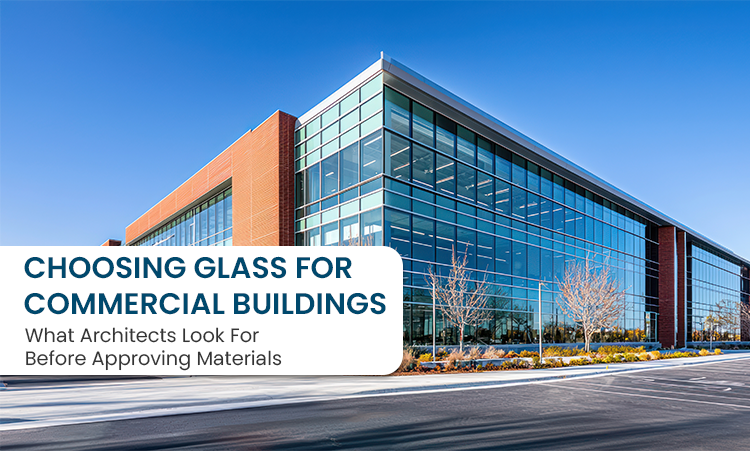
Choosing Glass for Commercial Buildings: What Architects Look For Before Approving Materials
Glass has become a major part of commercial construction. Office buildings, hospitals, malls, hotels, and institutional spaces now depend heavily on glass. Facades are larger. Interiors use more partitions. Staircases, skylights, and railings increasingly rely on glass instead of older materials.
Because of this shift, glass is no longer treated like a finishing element. Architects treat it like any other structural material that must perform reliably. Before approving glass for a commercial project, the discussion usually goes far beyond appearance. The real questions are practical.
Strength Comes Before Appearance
Glass selection usually starts with performance, not design. In commercial buildings, the real concern is how the material will behave after the building is occupied. Wind pressure, heat exposure, vibration, and daily human interaction all become part of the decision. Standard glass rarely fits these requirements. Toughened laminated glass usually comes into the discussion at this stage. Not because it sounds advanced, but because it simply handles site conditions better.
Another thing architects think about is what happens if something goes wrong. If a panel cracks, does it stay held together or does it break apart? That behaviour matters more than finish or appearance. In commercial projects, these practical questions usually decide approval, not aesthetics. If a panel cracks, what happens next? Will fragments fall? Will the panel stay in place? These real-world questions usually influence the decision more than how the glass looks.
Safety Standards Cannot Be Ignored
Commercial projects simply cannot compromise on safety. Glass used in areas where people move regularly must reduce injury risk if damaged. This is why laminated glass is commonly specified for railings, facades, overhead installations, and circulation areas.
Thickness and structural tolerance are also calculated based on usage, not just availability. Architects usually specify glass based on how the space will function, not just what looks suitable on drawings. These choices often align with broader construction safety thinking that shapes modern building material decisions. Architectural platforms like ArchDaily frequently document how safety concerns influence material selection in commercial design.
Long-Term Durability Is a Practical Concern
Commercial buildings don’t slow down after completion. Offices operate daily. Hospitals function continuously. Retail spaces especially see constant movement. People coming in and out all day. That kind of usage slowly tests every material inside the building. Because of that, glass can’t just perform well on day one. It has to keep performing years later.
Sometimes problems only show up after time. Bonding issues, visual defects, stress points. By the time they become visible, fixing them is never simple. Changing large panels after handover usually means equipment, manpower, and interruption to normal operations. Most project teams try to avoid that scenario from the start. That’s why durability becomes part of the decision from the beginning rather than something considered later.
Installation Reality Also Influences Selection
Material selection also depends on how the product will actually be installed. Architects think about handling challenges, transport safety, lifting logistics, and installation tolerances. Large panels are not just products. They require careful coordination. Even strong glass can become risky if preparation or installation accuracy is poor.
This is why architects usually prefer manufacturers like Tufftron who understand conditions and fabrication perfectly, instead of just selling glass as a product for business. Material performance depends just as much on preparation and execution as on specifications.
Acoustic and Thermal Considerations
Glass also affects how comfortable a building feels once occupied. In office and healthcare environments, reducing outside noise may become important. In other projects, controlling heat gain becomes part of the discussion.
Certain laminated combinations help reduce sound transmission, especially in buildings located near busy roads or dense commercial areas. These practical benefits sometimes influence approval decisions along with strength and safety considerations.
Why Manufacturer Capability Matters to Architects
Architects don’t just evaluate materials. They evaluate who supplies them. Consistency, quality discipline, ability to meet timelines, and responsiveness during fabrication all affect long-term working relationships.
Commercial projects involve multiple teams. Any delay or inconsistency can affect contractors, consultants, and project schedules. Because of this, many architects prefer manufacturers who understand project realities rather than those who only discuss product features. Reliability often matters as much as specification.
How TUFFTRON Supports Commercial Glass Requirements
At TUFFTRON, the focus stays on how the glass will actually perform once the building is in use, not just how it looks on drawings. Commercial work usually expects more than correct sizing. Projects usually need consistency from panel to panel, reliable fabrication quality, and also materials that don’t behave differently in different batches.
The focus usually remains on supplying toughened laminated glass suited for demanding applications while safety and durability not being compromised. Understanding how the glass will be used on site becomes part of the conversation from the beginning.
Closing Thought
Architects rarely choose glass based only on appearance. They look at strength, safety, durability, installation practicality, and how the material will perform years after the building opens. As glass becomes more central to modern commercial design, careful selection is becoming more important than ever.