
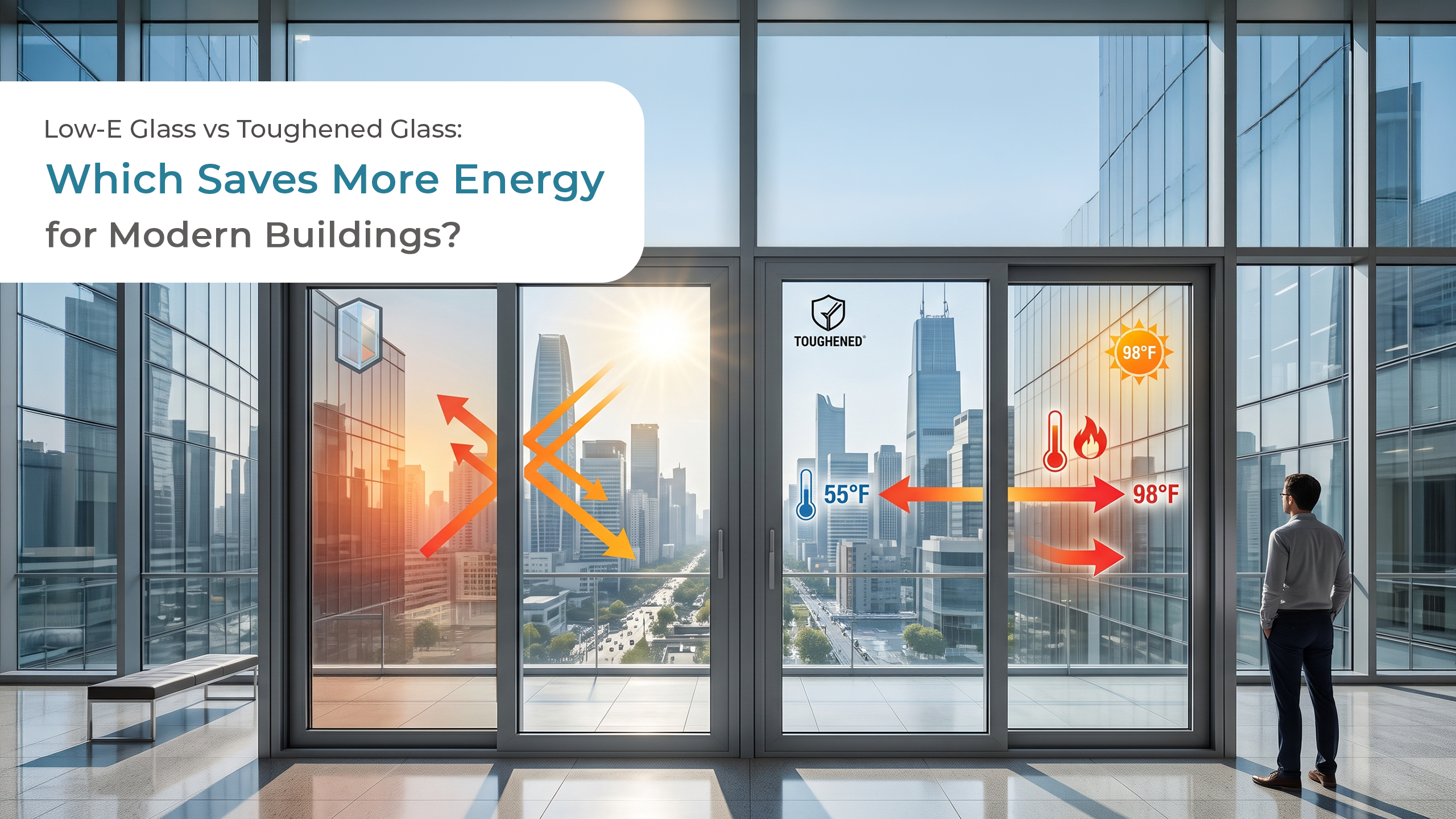
Low-E Glass vs Toughened Glass: Which Saves More Energy for Modern Buildings?
When people compare low e glass with toughened glass, they often assume one is automatically better than the other. In reality, they are built with different goals in mind. Toughened glass focuses on strength and safety, while low e glass is designed to reduce heat transfer and improve energy performance. If lowering electricity consumption and creating a comfortable indoor environment are priorities, Low-E technology deserves serious attention.
Understanding Low-E Glass
People rarely notice a Low-E coating by looking at a window. The real difference appears when the building is occupied. Low emissivity glass, commonly known as low e glass, is manufactured with a specialised coating that helps manage heat transfer through the glass. Natural light still enters the building, but excessive heat is reduced compared with ordinary glazing.
That seemingly small improvement can make offices, homes, hospitals, and educational buildings more comfortable throughout the day while supporting lower energy consumption. It is one reason many low e glass manufacturers recommend these products for projects where long-term operating efficiency is part of the design brief.
Toughened Glass Solves a Different Problem
A common misunderstanding is that energy performance and strength are interchangeable. They are not. Toughened glass is produced to improve durability and safety. It performs well in situations where impact resistance is important. Comparing low e glass vs toughened glass is therefore less about choosing a winner and more about understanding priorities.
One improves thermal performance. The other improves structural performance. Many architects specify both in the same project because each contributes something valuable. If your project calls for glass that can handle greater mechanical stress, it is worth looking at Tufftron's Heat Strengthened Glass range as well. It serves a different purpose from Low-E coatings and is often specified where additional strength is needed.
Which Option Saves More Energy?
Ask any facility manager what drives up electricity bills during summer, and cooling is almost always part of the answer. Glass plays a role in that. Stand near a large window that faces the afternoon sun and you will often feel the heat before you even touch the glass. That warmth eventually finds its way indoors, forcing air-conditioning systems to work harder.
This is where low e glass earns its reputation. Instead of letting as much radiant heat pass through, its coating helps keep a portion of that heat outside while still allowing natural daylight into the space. The difference is not about making a room instantly cold. It is about reducing the constant heat load that builds up over the course of the day. The U.S. Department of Energy discusses how advanced glazing technologies contribute to improved building performance.
Why Solar Control and Insulated Glazing Matter
Very few architects sit down and say, "Let's use just one type of glass everywhere." Most projects now don't rely on just one type of glass for a specific task. An office façade might use solar control glass where heat is a concern, DGU glass in enclosed areas for better insulation, and other glazing solutions where strength or safety matters more. The final decision usually depends on how that part of the building is expected to perform.
A hospital may place greater emphasis on occupant comfort. A premium residence may seek a balance between natural light and indoor temperature. The glazing specification changes accordingly. To understand another important category of architectural glazing, explore Tufftron's Heat Strengthened Glass page.
Choosing the Right Glass for Your Project
Construction budgets receive plenty of attention. Operating costs deserve the same level of discussion. Choosing low e glass may involve a different upfront investment, but many developers evaluate it from a life-cycle perspective rather than a purchase-order perspective. If reduced heat gain leads to lower cooling demand year after year, that decision continues creating value long after construction finishes.
At the same time, there are many situations where toughened glass remains the right engineering choice. Understanding the building's purpose is more important than following trends. You can explore additional architectural glazing options and project solutions through Tufftron.
A Note on Sustainable Construction
The conversation around green building materials has expanded significantly over the past decade. Improving energy performance is no longer viewed as an optional feature for many projects. Glass, insulation, orientation, ventilation, and building systems all contribute to the overall result.
The International Energy Agency has repeatedly highlighted the role of efficient buildings in reducing long-term energy demand.
Final Thoughts
If someone asks whether low e glass or toughened glass is the better product, the most accurate answer is that each serves a different purpose. When energy efficiency, occupant comfort, and thermal performance are key priorities, low e glass provides clear advantages. When structural strength and safety requirements lead the specification, toughened glass continues to be an excellent solution.
Many of the most successful commercial projects use both technologies together rather than treating them as competing alternatives. Before making a final decision, take time to evaluate the building's location, usage, climate, and long-term operating goals. A well-chosen glazing system can continue delivering value long after the construction phase is complete.
FAQs
1. What is Low-E glass?
Low-E glass, or low emissivity glass, is a specially coated glass designed to reduce heat transfer while allowing natural light to pass through.
2. Does Low-E glass save energy?
Yes. Low-E glass helps reduce unwanted heat gain or heat loss, making indoor spaces more comfortable and potentially lowering heating or cooling costs.
3. Is Low-E glass stronger than toughened glass?
Not necessarily. Toughened glass is manufactured primarily for strength and safety, while Low-E glass is designed to improve thermal performance.
4. Can Low-E glass and toughened glass be used together?
Yes. Many commercial and residential projects use Low-E coated toughened glass to combine energy efficiency with enhanced safety.
5. What is the difference between Low-E glass and toughened glass?
The main difference is their purpose. Low-E glass focuses on energy performance, whereas toughened glass focuses on impact resistance and safer breakage characteristics.
6. Where is Low-E glass commonly used?
It is widely used in office buildings, hotels, hospitals, shopping centres, premium residences, and other projects where energy efficiency is important.
7. What are insulated glass units?
Insulated glass units consist of multiple panes separated by a sealed gap to improve thermal insulation and reduce heat transfer.
8. What is DGU glass?
DGU stands for Double Glazed Unit. It is a type of insulated glazing that improves thermal performance and can also help reduce outside noise.
9. Does solar control glass reduce indoor heat?
Yes. Solar control glass is designed to limit excessive solar heat gain while still allowing useful daylight into the building.
10. How do I choose between Low-E glass and toughened glass?
The right choice depends on your project's requirements. If energy performance is the priority, Low-E glass is often preferred. If safety and structural strength are critical, toughened glass may be more suitable. Many projects successfully combine both technologies.