
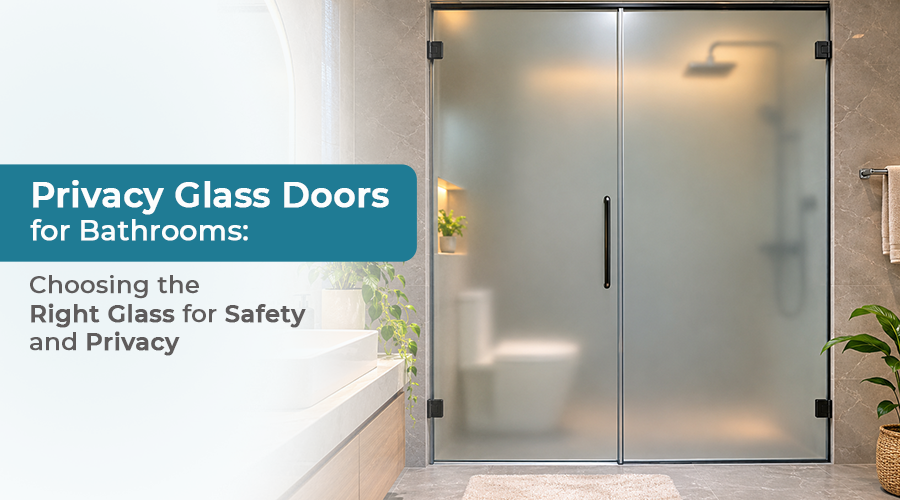
Privacy Glass Doors for Bathrooms: Choosing the Right Glass for Safety and Privacy
Quick Summary
Ever walked into a bathroom and felt like the whole place looked a little too closed off? That's one reason people consider glass doors and partitions. You get some separation without making the bathroom feel like a box. And if privacy is the concern, frosted or patterned glass can help without blocking all the light.
But here's the thing. Not every frosted glass finish gives the same privacy. A shower partition and a bathroom entrance door don't need the same setup either. You've got to look at the glass, finish, door opening, fittings and installation together. Let's go through what actually matters before spending money on one.
Privacy glass doors use translucent or patterned glass to reduce clear visibility while allowing light to pass through. They can be used for bathroom entrances, shower enclosures and internal partitions, depending on how much privacy is needed.
Table of Contents
Benefits of Privacy Glass Doors for Bathrooms
Let's say your bathroom is next to a dressing area. You want both spaces to feel connected, but you obviously don't want someone standing outside to see what's happening inside the bathroom.
A frosted glass door can solve that problem to some extent. It allows light to pass through while making it difficult to see clearly through the panel. So you get some privacy without making the entrance look like a solid wall. That's why people look for privacy doors for bathrooms.
There's another situation. Your bathroom has a separate shower area, but putting up another wall makes the whole place feel cramped. A glass partition can separate the shower from the washbasin without closing off the room.
And you don't have to frost every single panel. Sometimes a partial frosted design is enough. Sometimes the entire panel needs to be treated. It depends on where the glass is placed and what people can see from outside.
One thing, though. Frosted glass doesn't automatically mean complete privacy. Lighting, the finish and the angle from which someone looks at the glass can all change what they can see.
Where Privacy Glass Doors Work Best
Glass can be used in different parts of a bathroom. But each area has a slightly different requirement.
Bathroom Entrance Doors
This is where privacy matters the most. When someone closes the bathroom door, people outside shouldn't be able to see clearly inside.
Frosted bathroom glass can work well here. You can go with a fully frosted panel or have selected sections treated. Some people prefer a simple, uniform finish, while others like a little design on the glass.
Don't forget the lock either. A bathroom entrance needs a privacy lock that is easy to operate from inside. There should also be a suitable emergency access arrangement from outside.
A good-looking glass door is pointless if the locking arrangement becomes a headache every time someone uses it.
Shower Enclosures
Now, shower glass doors have a different job. They separate the bathing area from the rest of the bathroom.
Clear glass works when you want the bathroom to look open. Frosted glass is useful when the shower area is directly visible from the entrance or another part of the room.
For example, imagine someone opening the bathroom door while another person is using the shower. If the shower enclosure faces the entrance, clear glass may not give enough privacy. A frosted or partially treated panel could make more sense.
Water management is another matter. The glass panels, door alignment, bottom seals and side gaps all affect how well the enclosure keeps water inside the shower area. Even a good glass door can let water escape if the panels aren't aligned properly or the seals aren't suitable.
The floor slope and drainage arrangement matter too. The complete enclosure needs to be planned around how water moves across the bathroom floor. Otherwise, you might end up with water outside the shower area even after installing a proper glass door.
Internal Bathroom Partitions
Some bathrooms have enough space for a separate shower and washbasin area. A glass partition can divide these sections without making the bathroom feel like two separate rooms.
You might not need to frost the entire panel. If the partition is away from the entrance, a partial frosted design may be enough. If someone gets a direct view of the shower from the doorway, more coverage might be necessary.
Also check where the taps, shower fittings and other fixtures are placed. You don't want a beautiful glass partition getting in the way of everyday movement.
Frosted Glass vs. Clear Glass for Bathrooms
Here's a simple comparison.
| What to consider | Frosted Glass | Clear Glass |
|---|---|---|
| Visibility | Makes it harder to see clearly through the panel | Allows clear visibility |
| Natural light | Allows light through, depending on the finish | Allows light through |
| Privacy | Provides visual privacy to varying degrees | Offers very little visual privacy |
| Appearance | Soft, translucent appearance | Clean, transparent appearance |
| Surface | Can be smooth or textured, depending on treatment | Usually smooth and transparent |
| Suitable for | Bathroom entrances, private shower areas and partitions | Shower enclosures where visibility is acceptable |
Clear glass is a good choice when you want the bathroom to look open and don't have a privacy concern. It also lets you see the shower fittings without another visual barrier.
Frosted glass makes more sense when you don't want people seeing clearly through the panel. That's particularly useful for bathroom entrances and shower areas facing the doorway. That's why people look more now for privacy doors for bathrooms.
What about cleaning? Neither option is magically free from watermarks. Smooth frosted glass and textured finishes can have different cleaning requirements, so check the actual surface before ordering.
If you're confused between the two, look at actual samples in similar lighting conditions. Don't decide based only on a small catalogue photograph. The full-size panel can look quite different once light passes through it.
Types of Privacy Glass Finishes
Now, frosted, sandblasted and patterned glass may look similar from a distance. But they're not exactly the same thing.
Frosted Glass
Frosted glass has a translucent appearance that makes it difficult to see clearly through the panel. It allows light to pass through while reducing visibility.
It's commonly considered for bathroom entrances, shower enclosures and internal partitions where you want some separation without using an opaque material.
You can check Tufftron's frosted glass options to understand the finish and its possible applications.
Full frosting isn't always necessary. Depending on where the panel is installed, a frosted section at eye level or a partial design may do the job.
Sandblasted Glass
Sandblasted glass is produced by directing an abrasive material against the glass surface to create a textured, translucent appearance.
The finish can be used for privacy and decorative designs. Selected sections can be treated to create patterns, depending on the processing options available.
There's one practical thing to remember. The surface texture and treatment can affect how watermarks and soap deposits collect on the glass. Ask the supplier how the particular finish should be cleaned before placing an order.
Obscure and Patterned Glass
Obscure or patterned glass uses a textured or designed surface to reduce clear visibility through the panel.
The amount of privacy depends on the pattern and how the glass is viewed. Some patterns provide more visual separation than others.
This is worth considering if you want something beyond a plain frosted appearance. But look at an actual sample before ordering. A small sample can look quite different from a full-size panel once light passes through it.
Choosing the Right Level of Privacy
Not every bathroom needs the same level of privacy.
A bathroom entrance may need full frosting. An internal shower partition may only need a partial design. If the shower is tucked behind the washbasin and isn't directly visible from the entrance, you may not need to cover the entire panel.
But if the shower enclosure faces the entrance, you'll probably want more of the glass treated.
Lighting can change things as well. A frosted panel may look private during the day but appear different when one side is brightly lit and the other is darker. Don't judge the finish only under showroom lighting.
A few things to check:
- Where exactly will the glass be installed?
- Can someone see the panel directly from the bathroom entrance?
- Will there be bright lighting behind the glass?
- Do you need privacy across the entire panel or only at certain heights?
- Will a decorative pattern provide enough visual separation?
If privacy is particularly important, ask the supplier to show you the selected finish under realistic lighting conditions.
And one more thing. Visual privacy and sound insulation are two different things. Frosted glass makes it harder to see through the panel, but it won't automatically stop conversations from travelling into the next room. If sound insulation matters, ask about the acoustic performance of the complete door or partition system separately.
Safety and Toughened Glass Specifications
Let's talk about safety now. Bathroom doors and partitions get used regularly. People move around with wet hands and wet floors, and accidental impacts can happen.
Toughened glass is processed using controlled heating and rapid cooling to improve its strength compared with ordinary annealed glass. When it breaks, it generally breaks into smaller pieces rather than large sharp shards.
But don't mistake that for unbreakable glass. It can still break.
Toughened glass bathroom doors may be suitable for certain applications, but the specification needs to match the installation. A bathroom entrance door, a fixed shower partition and a sliding shower door can have different dimensions, support arrangements and hardware requirements.
Don't select thickness just because a thicker panel sounds safer. The specification needs to account for the panel dimensions, support, door configuration and applicable safety requirements.
Before fabrication, ask the supplier:
- Is this glass suitable for the intended bathroom application?
- What thickness and specification are being proposed?
- Are the hinges, handles and fittings compatible with the glass?
- How will the glass be supported and fixed?
- What safety requirements apply to this particular installation?
You can read more about Tufftron's toughened glass to understand the basic process and its characteristics.
The glass processing and handling side matters too, especially when you're dealing with large panels. You can have a look at Tufftron's infrastructure and processing facilities for information about its infrastructure. Just remember that processing capabilities alone don't confirm that a particular bathroom door design, hardware combination or installation service is available. Confirm those details directly.
For architectural safety glass in India, the Bureau of Indian Standards (BIS) is a useful starting point for checking applicable requirements. The relevant specification should be confirmed for the actual installation rather than assuming every toughened glass product suits every situation.
For broader building-related reference material, you can also consult the National Building Code information available through BIS. Don't treat the general BIS homepage as confirmation of a specific bathroom glass installation rule. The relevant provisions and their applicability need to be checked for the project.
Bathroom Entrance Doors vs. Shower Glass Doors
Both are bathroom glass doors, but they don't do the same job.
| What to consider | Bathroom Entrance Door | Shower Glass Door |
|---|---|---|
| Main purpose | Provides privacy for the entire bathroom | Separates the shower area |
| Privacy | Usually needs a higher level of visual privacy | Depends on shower position and user preference |
| Water exposure | May face occasional moisture | Regularly exposed to water |
| Opening | Hinged, sliding or another suitable arrangement | Hinged or sliding, depending on the enclosure |
| Hardware | Handles, locks, hinges and related fittings | Hinges, handles, seals and shower fittings |
| Main consideration | Privacy and convenient access | Water containment, access and cleaning |
A bathroom entrance door should provide privacy when closed. A shower glass door has a different job. It needs to separate the wet area while allowing people to enter and leave comfortably.
For example, clear shower glass may be perfectly fine when the enclosure is positioned away from the bathroom entrance. But if the shower area is directly visible from outside, frosted or partially treated glass may be worth considering.
Bathroom glass partitions are slightly different again. They may not have a door at all. Their purpose is simply to separate the shower, washbasin or other sections of the bathroom.
So first be clear about what you're actually installing. The glass, fittings and installation arrangement should follow that decision of you wanting a proper privacy doors for bathrooms.
Sliding vs. Hinged Bathroom Glass Doors
Here's the practical difference between the two.
| What to consider | Sliding Glass Door | Hinged Glass Door |
|---|---|---|
| Opening | Panel moves along a track | Door swings open |
| Space needed | Needs room for the panel to slide | Needs clearance for the door to swing |
| Access | Depends on opening width and panel arrangement | Can provide a wider opening depending on design |
| Hardware | Tracks, rollers and handles | Hinges, handles and related fittings |
| Maintenance | Tracks and rollers need attention | Hinges and other moving fittings need attention |
| Suitable for | Bathrooms with limited swing clearance | Bathrooms with enough space for the door to open |
A sliding door can be useful in a compact bathroom where a hinged panel would hit the washbasin, toilet or another fixture. But don't assume every sliding system saves space. The panel still needs room to move, and the track arrangement has to suit the opening.
A hinged door may be more straightforward when there's enough clearance. It also avoids the need for a sliding track and rollers.
Imagine opening the shower door and having it hit the washbasin every single time. Annoying, right? That's exactly the kind of thing you want to catch before installation.
The choice comes down to available space and everyday use. There's no point choosing a sliding mechanism if a simple hinged door works perfectly well.
Frames, Hinges, Handles and Everyday Use
The glass gets most of the attention, but the frame and hardware are what hold the whole arrangement together.
Frames support the glass and help secure it in the selected position. Hinges allow a door to swing open, while tracks and rollers guide sliding panels. Handles, locks and seals help with access, privacy and the overall fit.
Some designs use visible frames, while others aim for a cleaner frameless appearance. The fixing arrangement, hardware and support requirements need to suit the selected design. A frameless design still needs suitable support and properly selected fittings.
The fixing points also need proper planning because the glass, hinges and supporting fittings work as one assembly. The weight of the panel and the type of wall or floor fixing both matter.
Bathroom fittings also need to suit the moisture exposure. A fitting that looks good in a catalogue may not be the right choice for regular use in a wet area.
Ask about corrosion resistance as well. Bathroom fittings are regularly exposed to moisture, and the hardware should be suitable for that environment. Don't select hinges, handles or other fittings based on appearance alone.
Think about a shower enclosure that's opened several times a day. If the hinges become difficult to operate or the sliding panel starts sticking, the door quickly becomes a problem.
A few things to check:
- Are the hinges and handles suitable for the glass thickness?
- Is the hardware appropriate for bathroom moisture exposure?
- Does the locking arrangement work for the intended door?
- Are suitable seals included for the shower enclosure?
- Can the tracks, hinges and other fittings be accessed for maintenance?
- Are all the required fittings included in the quotation?
Also check how the door moves once installed. It shouldn't hit a toilet, washbasin, shower fitting or nearby wall when opened.
Cleaning and Maintenance
Bathroom glass needs regular cleaning. Water splashes, soap deposits and mineral marks can build up over time, particularly around shower enclosures.
Clear glass makes visible watermarks easier to notice. Frosted and textured finishes may need a little more attention depending on the surface and treatment used.
A few simple habits help:
- Wipe down the glass after showering when practical.
- Use a suitable glass cleaner and a soft cleaning cloth.
- Avoid abrasive pads or harsh chemicals unless the supplier confirms they're suitable.
- Clean around hinges, handles, seals and tracks.
- Check sliding rollers and other moving fittings periodically.
If you're choosing sandblasted or patterned glass, ask how the treated surface should be maintained. Some textures can collect soap deposits or watermarks differently from smooth glass.
There's no need to assume that one finish is maintenance-free. The actual cleaning requirement depends on the glass, finish, water quality and how frequently the bathroom is used.
Things to Sort Out Before Installation
Privacy glass doors need accurate measurements. You can't always fix a mistake after a custom glass panel has been made.
Start with the opening. Measure its width and height, check the wall and floor conditions, and identify where the hinges, frame or track will be fixed.
Then look at the rest of the bathroom. Will the door hit the washbasin? Does the open panel block access to the shower? Is there enough space to enter and leave comfortably?
The glass specification, finish, frame, handles, locks and other fittings should be decided before fabrication. Changes made after the panel has been manufactured can complicate the installation.
It's also worth checking how the glass will reach the bathroom. Large panels need careful handling, and narrow corridors, staircases or doorways can affect how they're transported into the building.
One last thing: look at the complete bathroom, not just the glass. The door can clash with taps, shower fittings, electrical points or other fixtures if nobody checks the layout beforehand. Much easier to sort that out before fabrication than after.
What Affects the Price?
There's no useful one-size-fits-all price for privacy glass doors for bathrooms. A small frosted bathroom entrance door is very different from a large shower enclosure with multiple panels and customised fittings.
The size and thickness of the glass matter. So do the type of finish, whether it needs frosting or sandblasting, the frame design, opening mechanism, handles, hinges and other hardware.
Custom dimensions and decorative treatments may involve additional processing. Transport and installation can also add to the cost, particularly when access to the bathroom is difficult.
The opening mechanism matters as well. A sliding system needs suitable tracks and rollers, while a hinged door needs compatible hinges and supporting fittings. The final quotation should reflect the complete arrangement, not just the glass panel.
When comparing quotations, check what's included. One supplier might quote only for the glass, while another includes hardware, delivery and installation. Those aren't like-for-like prices.
If your bathroom has enough room for a hinged door, a simpler arrangement may do the job. No need to pay for a sliding system if you don't actually need one.
Get comparable quotations before deciding which design makes more sense.
Privacy Glass Doors for Bathrooms in Guntur and Andhra Pradesh
If you're planning privacy glass doors for bathrooms in Andhra Pradesh, start with the bathroom layout rather than picking a design first.
A frosted glass entrance door might suit a bathroom where you want privacy while allowing light into the adjoining area. A clear shower enclosure may be fine when the bathing area is already positioned away from the entrance. A frosted partition may make more sense when the shower area needs additional visual separation.
For anyone looking at frosted glass partitions in Andhra Pradesh, the same practical checks apply. Look at the panel dimensions, glass specifications, privacy finish, fittings and installation conditions before finalising the design.
For businesses and homeowners looking for bathroom glass doors in Guntur, measurements and installation access deserve attention. Check the opening dimensions, door movement, wall conditions and access for transporting the glass before placing an order.
Tufftron has also published a separate article on glass partitioning for offices in Guntur. That's a different application from bathroom partitions, of course, but it gives readers another reference for understanding glass partition solutions. Bathroom installations still need their own privacy, water management and safety considerations.
Before making a decision, ask the supplier to explain the glass type, thickness, finish, hinges, handles, seals and installation work. Make sure the quotation identifies delivery, fittings and installation rather than leaving you to discover additional costs later.
You can also look at Tufftron's frosted glass options to understand the available finish. For the final selection, the main question is whether the glass provides the privacy you need and suits the way your bathroom will be used.
Frequently Asked Questions
Not always. Frosted glass makes it harder to see clearly through a panel, but the actual privacy depends on the finish, lighting and viewing angle. If strong visual privacy is important, check the selected glass under suitable lighting before ordering.
Yes, toughened glass can be suitable for bathroom doors and partitions when its specification matches the intended application. The thickness, panel dimensions, support arrangement, hardware and applicable safety requirements should be confirmed before fabrication.
Frosted glass describes the translucent appearance that reduces clear visibility. Sandblasting is one process used to create a textured, frosted appearance on a glass surface. The finish and maintenance requirements can vary depending on the treatment.
It depends on the shower's position and how much privacy you need. Clear glass works when visibility isn't a concern and you want an open appearance. Frosted glass may be more suitable when the shower area is visible from the bathroom entrance or other parts of the room.
Use a suitable glass cleaner and a soft cloth. Wipe away water and soap deposits regularly, and avoid abrasive cleaning materials unless the supplier confirms they're safe for the selected finish. Textured or treated glass may need specific cleaning instructions.
They can be, particularly when a hinged door would interfere with a washbasin, toilet or walkway. But the sliding panel still needs room to move. Check the available wall space, track arrangement and opening width before choosing the system.
Glass dimensions, thickness, processing, frosting, sandblasting, frames, hardware, opening mechanisms, customisation, transportation and installation all matter. Ask suppliers to list what's included so you can compare quotations properly.
Conclusion
Privacy glass doors can be a good choice when a bathroom needs separation but still wants to feel open. But don't pick one just because it looks good in a photograph.
Look at how much privacy you need, where the glass will be installed, how the door will open and what fittings will hold everything together. Get the glass specification and complete installation cost confirmed before fabrication.
If you're planning a bathroom glass installation and want to understand which option suits your space, reach out to Tufftron for a consultation.
Tufftron Toughened Glass, Guntur+91 951 951 6224
info@tufftron.com